No. 5
A gallery on a Tuesday morning
Museums are different places when they are nearly empty. A weekday morning is the best time to find that out.
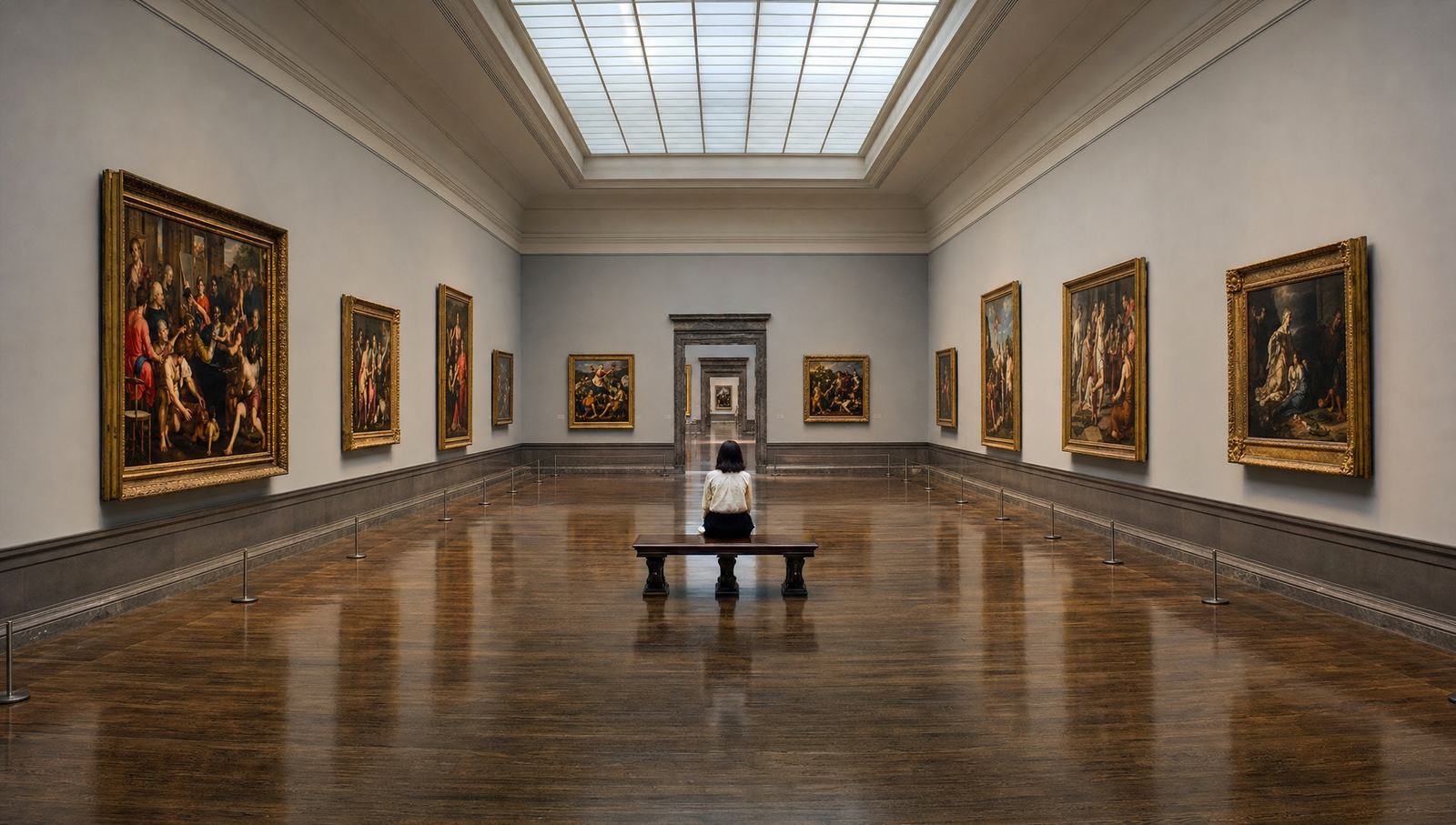
Arrive at a museum when it opens on a weekday and the building feels borrowed. Guards are still settling into their rooms. A cleaner finishes the far end of a corridor. School groups have not arrived yet, and the galleries carry an echo that disappears by noon.
This is the time to sit down. Most museums put benches in front of the works they think reward a long look, and on a quiet morning you can actually use one. Ten minutes in front of a single picture changes what you see. The first minute is recognition. Somewhere around the fifth, details start to arrive: a reflection in a glass, a dog half hidden under a table, a second figure in a doorway.
A few habits
Choose one room and stay in it. Read the labels after you have looked, so the card does not tell you what to notice. Move to the side and look at the surface at an angle, where brushwork and old cracks catch the light. Walk away, look at something else for a few minutes, and come back. The picture is the same, and you will see it differently.
If a guard is nearby and the room is empty, ask what they like in it. People who spend eight hours a day with a collection have favourites, and their reasons are rarely the ones in the guidebook.
Small things help. Leave the big coat and bag in the cloakroom, since a free pair of hands makes it easier to stand still. Check which rooms are closed for rehanging before you set off. Many museums post that on the day, and a closed room is often a sign of new work arriving. If there is a free floor plan, take it, and mark the one or two pictures you came to see so you can go straight to them before anyone else arrives.
Before the crowds
By late morning the rooms fill and the echo goes. That is fine; museums are meant to be busy. But the quiet hour shows the building as its staff know it, and it makes clear how much care goes into a room you might otherwise walk through in a minute, from the lighting to the condition of each surface.