No. 3
Provenance, one owner at a time
A painting's ownership history is built from sale catalogues, letters and labels on the back of the frame. The gaps matter as much as the names.
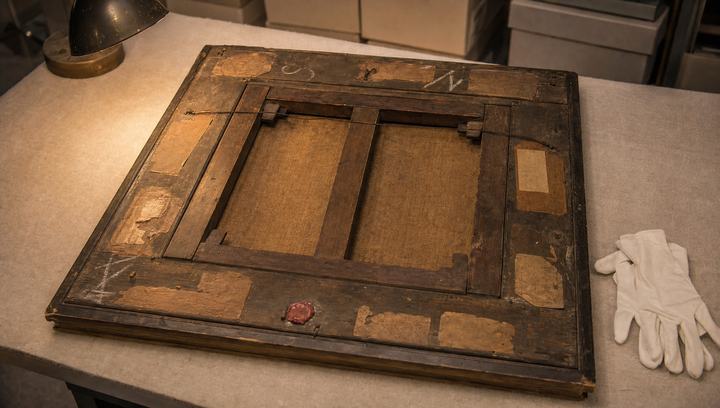
Turn an old painting over and the back is often busier than the front. Stretcher bars carry dealer labels, exhibition stickers, inventory numbers in chalk or ink, customs stamps, and sometimes a wax seal from a collection that no longer exists. To a provenance researcher, each mark is a clue to who owned the picture and when.
Provenance is the record of a work's ownership from the moment it left the artist's studio to today. Museums use it to confirm attribution, to understand a work's history, and to make sure they hold good title. For a few decades now it has also been central to the return of art taken from its owners during the Nazi era.
How the record is built
Researchers work outward from the object. The labels on the back give dealer names and stock numbers, which can be matched against the dealers' own archives where those survive. Exhibition labels point to catalogues, and catalogues often list lenders by name. Auction sales leave annotated catalogues, with buyers and prices pencilled in the margins by people who attended.
Each source fills in a line: owned by this collector until this year, sold through this gallery, bought by this family. The result reads like a list, but every line has to be supported by a document, and many lines end in a question mark.
Why the gaps matter
A gap in provenance is a period where nobody can show who owned the work. Gaps are common. Families did not keep receipts for pictures that hung in the hall for three generations. But a gap between 1933 and 1945 in Europe gets close attention, because those were the years when Nazi Germany and its agents confiscated, forced the sale of, or looted works on a vast scale, much of it from Jewish collectors and dealers.
After the war, Allied officers, archivists and art historians worked to locate and return what had been taken. Their records, including collecting point inventories and photographs, are now among the most important sources for provenance work. The United States National Archives keeps many of these files and describes them in its guide to art provenance and claims records.
What museums do with a gap
When a gap falls in those years, a museum's researchers go looking for the missing owner. They check wartime sale records, the lists of confiscated property, and the claims files of families who have spent decades searching. If the evidence shows a work was taken unjustly, many museums now negotiate a return or a settlement with the heirs. Sometimes the heirs then sell the painting, and it reappears on the market with a clear history for the first time in eighty years.
Other gaps never close. The documents are gone, or the owner left no trace. Museums publish those incomplete histories too, so that anyone holding the missing piece of the story has a chance to come forward.
The quiet part of the job
Most of provenance research is slow: reading microfilm, writing to archives in three languages, matching a faint stock number to a ledger. It rarely ends in a headline. When it works, the result is a single extra line on a credit label, the kind most visitors read past. The wartime years left more of those lines to write than any other period.