No. 2
Reading the label
The small card beside a painting holds more than a title. Most of what it says is about where the picture has been.
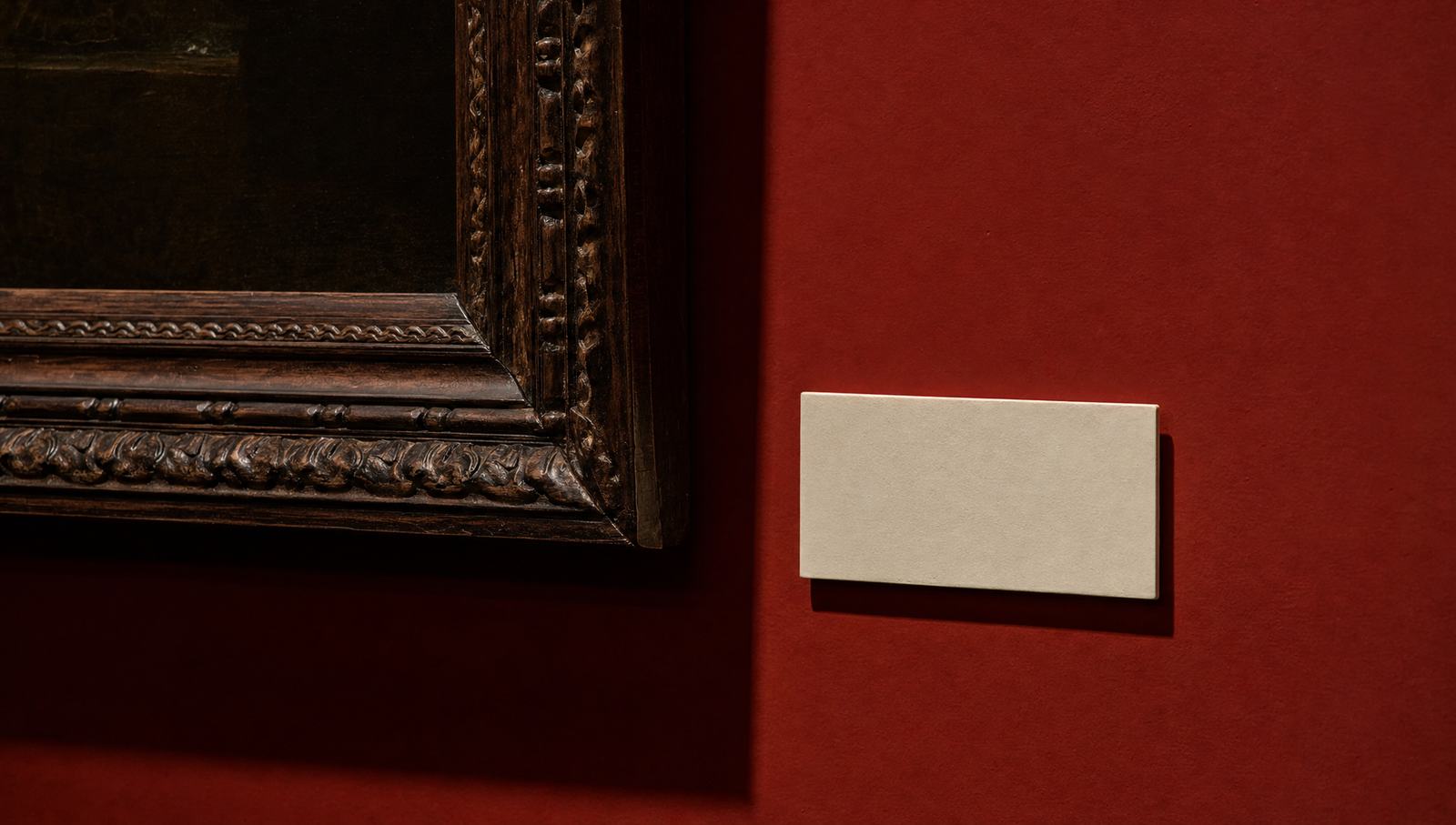
Most visitors glance at the label for the artist's name and move on. That makes sense. The label is set small and low, and it is meant to be read after the picture. Given a few extra seconds, though, it will tell you a surprising amount about how the work reached the wall.
The first lines
The artist's name comes first, often with birth and death years and a place. Watch for a qualifier in front of it, such as "workshop of" or "follower of", which tells you the attribution is less certain. Then the title, which may be the artist's own or one given by a dealer or a later cataloguer. Older paintings frequently have descriptive titles that nobody chose on purpose, such as "Portrait of a Man" or "Landscape with a River", and a museum may keep them for clarity.
The date can be a single year, a range, or a year with "about" or "circa". A range usually means the picture was worked on over time or that the evidence points to a span of years.
Medium and size
"Oil on canvas" and "oil on panel" are the familiar pair. Panel means wood, which behaves differently from canvas as humidity changes and needs steadier conditions. You might also see "tempera", "gouache", "oil on copper", or long lists for mixed works. Dimensions are usually height before width, and many museums give both centimetres and inches.
The credit line
Near the bottom sits the credit line, and this is where a label starts to tell a story. It names how the museum acquired the work: a gift, a bequest from someone's estate, a purchase made with a particular fund, or a loan. "Gift of" followed by a family name means the work once hung in a private home. "Lent by" means it belongs to someone else and will leave when the show ends.
For a work that travelled a long road, the credit line is the short public version of a much longer file. Museum staff keep the full ownership history, the provenance, in their records, and many now publish it online. A credit line that mentions a restitution, a settlement, or a later purchase from heirs is pointing to that longer history.
The number at the end
Most labels end with an accession number, something like 1987.112.3. The first part is often the year the museum acquired the work. The rest identifies the acquisition and the object within it. It looks like bookkeeping, and it is, but it is also the key to every record the museum holds on that picture: condition reports, loan history, conservation notes, photographs.
A habit worth trying
On your next visit, pick three works in one room and read the credit lines only. You will often find a gift, a purchase and a loan within a few steps of each other. Each one arrived by a different road, and the labels are the only part of that road a visitor gets to see.