No. 1
What a crate tells you
A travelling painting spends more of its life in a box than most visitors would guess. The box is built for that one picture.
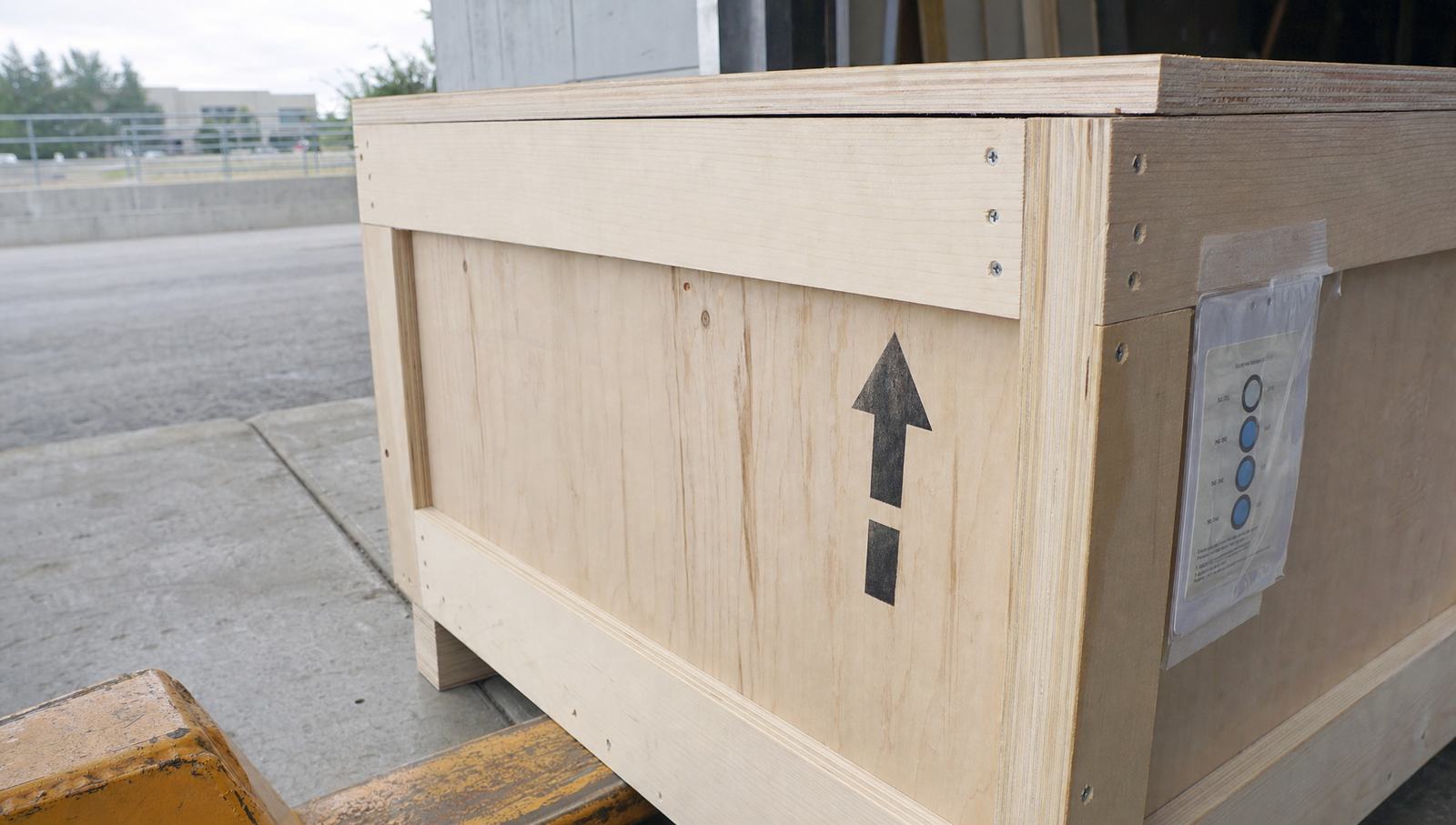
Walk past a museum loading dock on the week an exhibition comes in and you will see stacks of plywood boxes, each a slightly different size, each marked with arrows and a string of numbers. They look like ordinary freight. Every one of them was built for a single object, and most were built only weeks before.
A painting that travels to another museum is usually crated by specialists the lender approves. The lender is the institution or collector who owns the work, and its loan agreement often spells out how the crate must be made, who may open it, and how long the work must rest before anyone takes it out.
The box inside the box
A good painting crate is two crates. The outer shell is plywood on a timber frame, screwed rather than nailed so it can be opened without hammering. Inside sits a lighter travel frame or a second case that holds the painting itself. Between the two is foam, cut and tested so it absorbs a jolt instead of passing it on.
Foam is chosen by weight. A small panel painting and a large canvas need different densities, because foam that is too stiff behaves like wood and foam that is too soft lets the inner case bottom out. Crate makers work from tables that match the object's weight to the foam's bearing area, and the numbers are the reason two crates of similar size can look so different inside.
The inner case is lined with a smooth, inert material so nothing scuffs the frame. Paintings are usually wrapped in a vapour barrier, often a polyethylene sheet or a foil laminate, which slows down how quickly moisture can move in or out. Gilt frames get extra padding at the corners, where they chip first.
Why the crate rests
When a crate arrives, staff often leave it closed for a day. Sometimes it stays shut for two. The reason is temperature and humidity. A crate that spent hours in a cold truck holds cold air around the painting. Open it at once in a warm gallery and moisture can condense on the surface, which is the last thing an old varnish needs. Letting the crate sit lets the inside catch up slowly with the room.
That is also why many crates carry a small humidity indicator card taped near a seam, or a data logger tucked inside. The logger records temperature, humidity and shock for the whole trip, and the registrar reads it before the case is opened. A spike on the chart tells everyone where to look first.
Reading the outside
The markings on a crate are written for handlers who may not speak the same language. They tend to include:
- arrows showing which way is up, because many paintings must travel upright;
- a centre-of-gravity mark, so a forklift driver knows where to lift;
- a weight, both of the empty crate and of the crate packed;
- an opening side, often marked in a different colour, so nobody pries off the wrong panel;
- a crate number that matches the registrar's paperwork.
Some crates also carry a small diagram of the screw pattern. When the lid comes off, the screws go into a labelled bag, and the same screws go back in for the return trip. Mixed-up hardware is one of the small errors registrars learn to prevent.
The person who travels with it
Major loans often come with a courier, a staff member from the lending museum who travels with the shipment, watches it unloaded, and stays until the work is safely on the wall. Couriers check the condition report line by line, compare photographs, and sign off before the lending museum hands over responsibility. Some museums now send fewer couriers and rely on trusted partners and digital reports, which saves money and fuel, but for fragile or very valuable pictures a courier is still common.
Once the show closes, the whole process runs in reverse. The empty crates have been sitting in a storeroom for months, labelled and stacked, waiting for the same paintings to come back to them. The crate goes home with its painting, and often it is kept for the next loan. A well-made box can travel with the same picture for years.
What to look for next time
If a museum you visit is changing exhibitions, look for the service door. You may see empty crates waiting, or a handler checking a label on a pallet. Each of those boxes held a picture you may have stood in front of, and each was made for the one painting inside. The same care shows up later in the gallery itself, down to the small card beside each frame.